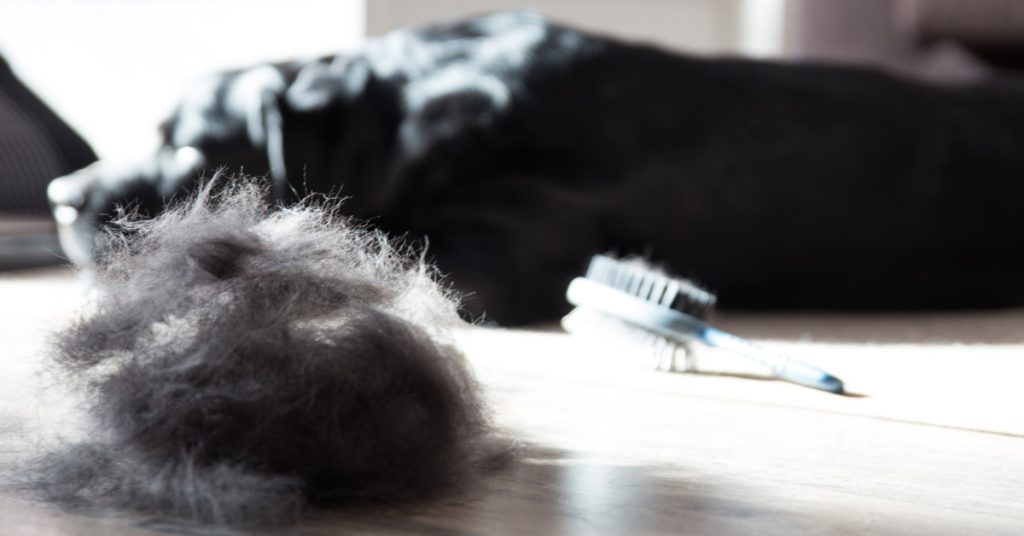
Dog fur can be quite a nuisance – clinging to clothes, furniture, and even ending up in our food. But have you ever considered using that fur creatively? Here are a few innovative ways to repurpose it.
Just as you can spin and knit sheep wool, you can do the same with dog fur. Whether it’s mittens or a sweater, a garment made from your dog’s fur can be a unique keepsake. However, not all dog fur is suitable for spinning into “chiengora” (wool made from dog fur). The best fur comes from the undercoats of long-haired, rough-coated breeds like Golden Retrievers or Newfoundlands, where the longer undercoat makes for better spinning.
For dogs with shorter undercoats, blend the fur with longer fibers like sheep wool or alpaca fleece. For breeds with short fur, such as Rottweilers, you can mix their fur into longer fibers during spinning, though be aware that this may cause some shedding over time.
Birds will gladly use dog fur to line their nests. You can place clumps of fur on bushes and fence posts or put it in a suet cage or small paper bag for the birds to collect. While your dog might enjoy watching the birds, you can take pride in helping these feathered friends stay warm.
Felting is a classic craft method that involves transforming fibers into fabric. For wet felting, simply use hot soapy water and dog fur. Lay the fur flat and rub it together with your fingers and water; the fibers will eventually mat together into a felt sheet, similar to store-bought felt. Adding a few drops of essential oil during felting can give your project a pleasant scent.
Alternatively, try needle felting by repeatedly poking a special felting needle into a wad of fur on a cushion. The needle’s barbs help interlock the fibers. Needle felting can be used to create felted decorations on fabrics or even make three-dimensional sculptures.
Dog fur can help keep pests away from your garden. Stuff burlap bags or pantyhose with fur, tie them up, and place them around your yard or garden borders. Small animals may avoid the area, thinking your dog is nearby. You may need to refresh the fur periodically to maintain its effectiveness.
You can also use loose fur around plant roots to deter animals and trap slugs, snails, and small insects.
Dog fur is excellent for absorbing oil. Matter of Trust, an environmental nonprofit, collects hair, fur, and fleece to create mats and booms that help clean up oil spills. Mats are used to line storm drains to prevent motor oil from reaching waterways, while booms contain oil spills and help keep beaches clean. You can contribute to their Clean Wave Program with your fur donations.
Dog fur makes for excellent stuffing material. If you enjoy crafting, you can sew your own dog toys and use fur instead of synthetic stuffing. For a simpler project, make a dog bed or a throw pillow for yourself to enjoy the comfort of fur.
Dog fur is rich in nitrogen, a key nutrient for plant growth. It helps soil retain moisture and regulate temperature. As the fur decomposes, it releases nitrogen to nourish your garden.
You can also add fur to your compost pile. Mix it with other green materials, like vegetable scraps, and turn your compost regularly to keep it aerated. After about a month, the fur will break down sufficiently to be used as garden fertilizer.
{{head}}