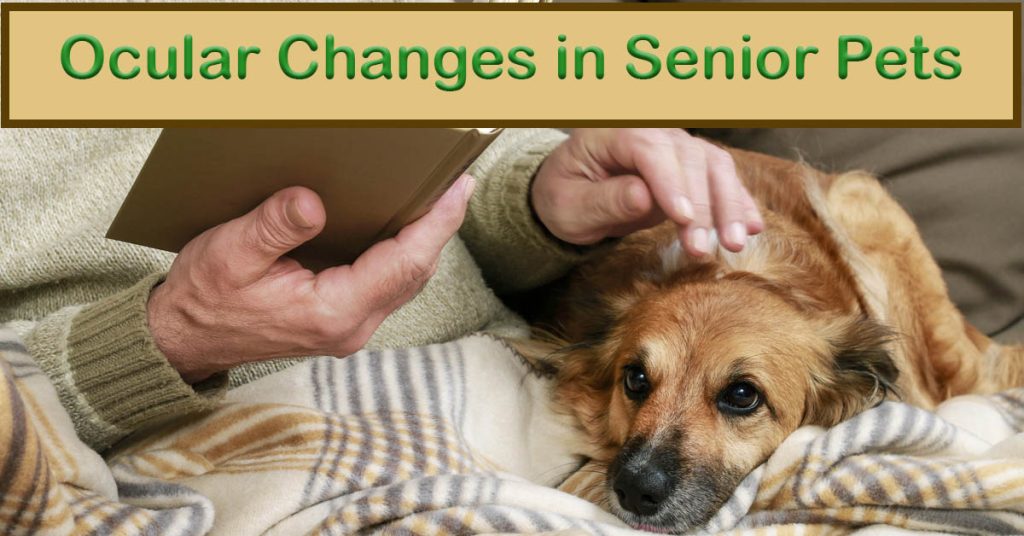
Senior pets can experience various ocular changes as they age, just as humans do.
Here are some common ocular changes that can occur in senior pets:
Cataracts are a common age-related condition in senior pets. They cause clouding of the lens inside the eye, leading to reduced vision or even blindness. Cataracts can develop gradually and may require surgical intervention if they significantly affect your pet’s vision.
Older pets may be prone to dry eye (Keratoconjunctivitis sicca), a condition characterized by inadequate tear production. This can lead to eye discomfort, redness, discharge, and increased susceptibility to eye infections. Artificial tears or medication prescribed by a veterinarian can help manage this condition.
Glaucoma is a condition characterized by increased pressure within the eye, which can damage the optic nerve and cause vision loss. It can be acute or chronic and requires immediate veterinary attention. Symptoms may include redness, pain, squinting, and dilated pupils.
Senior pets can develop age-related changes in the retina, such as retinal degeneration or detachment. These conditions can lead to vision impairment or blindness.
Inflammation of the conjunctiva, known as conjunctivitis, can occur in older pets. It can be caused by allergies, infections, or other underlying conditions. Symptoms may include redness, discharge, squinting, and rubbing of the eyes.
The cornea, the transparent front part of the eye, can undergo changes with age. It may become cloudy, develop scars, or thicken, affecting vision.
Regular veterinary check-ups are crucial for senior pets, including thorough ocular examinations. If you notice any changes in your senior pet’s eyes, such as redness, discharge, cloudiness, or vision problems, it is important to consult a veterinarian promptly. Early detection and treatment of ocular conditions can help maintain your pet’s eye health and preserve their vision.