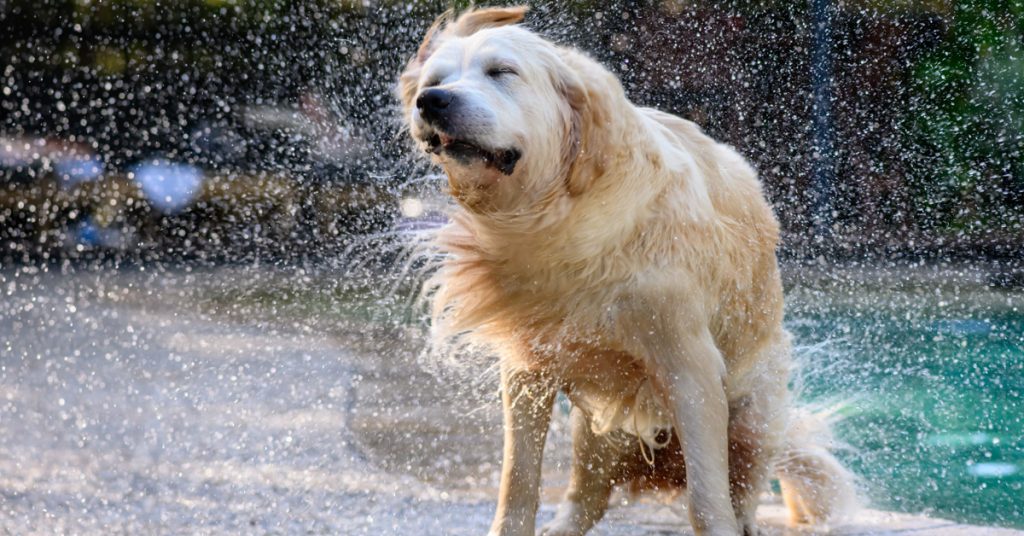
Have you ever been hit with that unmistakable odor when your furry friend snuggles up after a splash in the rain, sprinkler, pool, or pond? It’s not just your imagination—’wet dog smell’ can be particularly intense.
Like all living creatures, dogs have microorganisms on their skin, including yeast and bacteria. These microbes break down the natural oils in your dog’s coat and release organic acids as waste. When dry, these acids don’t produce much of a smell, but once they come into contact with water, they become more acidic and emit that distinctive odor.
Moreover, when these particles are wet, they can escape from your dog’s coat and linger in the air, amplifying the smell and creating a “cloud of stink” effect around your pup.
Although wet-dog smell is hard to avoid, you can take steps to keep your dog cleaner, healthier, and less odorous:
Regular Brushing:
Brush your dog regularly to spread natural oils evenly and reduce buildup. This also helps remove excess oil, minimizing the food source for bacteria and yeast. Plus, a shiny, well-maintained coat can reduce loose hair in your home!
Dry Shampoo:
Consider using a dog-specific dry shampoo occasionally. Consult your veterinarian to ensure the product is safe and suitable for your pet.
Clean Bedding:
Wash your dog’s bedding and blankets frequently to minimize the growth of odor-causing microorganisms.
Periodic Bathing:
Bathe your dog or have them groomed regularly, using products made specifically for dogs. Avoid human shampoos, as they can cause skin issues. Don’t overdo it with baths, as too much can strip natural oils, leading to dryness and potential skin problems.
Health Check:
If your dog’s smell is unusually strong or different despite following these tips, or if you notice any changes in their scent, consult Healing Springs Animal Hospital. Unpleasant odors can sometimes indicate infections or other health issues.
Taking these steps can help manage your dog’s smell and keep them happy and healthy.
{{head}}