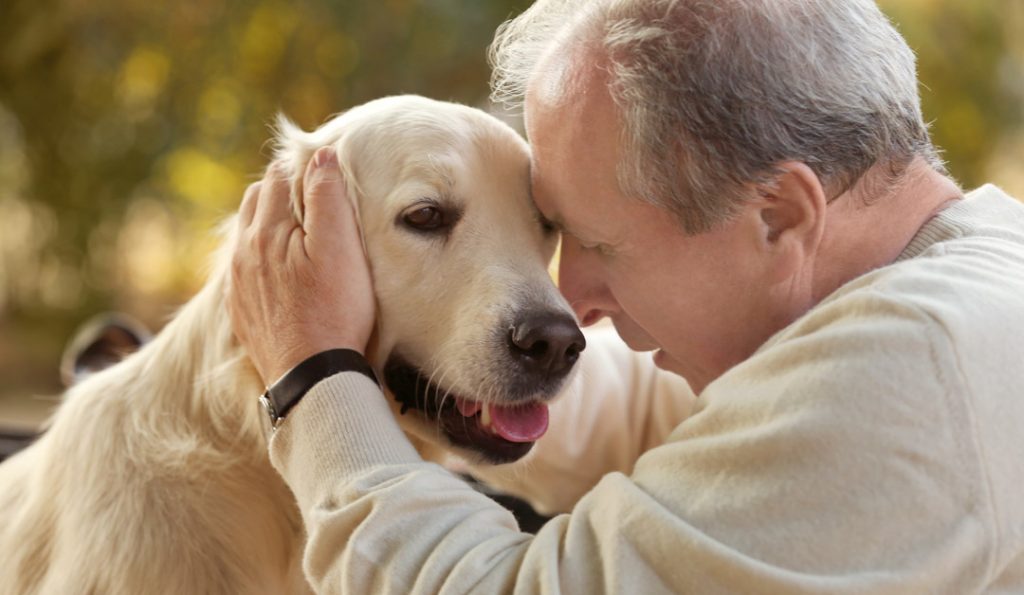
Can dogs get Alzheimer’s? In a manner of speaking, yes. Some older dogs develop what is called canine cognitive dysfunction, or CCD. It’s helpful to be able to recognize canine cognitive dysfunction because simple changes in routine can do a lot to protect your pet’s quality of life, and because the FDA has recently approved a drug that can improve the symptoms of CCD.
The most obvious signs of CCD tend to be wandering at night and forgetting their housetraining. Other signs might be:
• Disorientation
• Peeing in the house shortly after coming in from the outside
• Not responding to their own name as well as before
• Seeming to forget purpose or where to go next
• Stares into space or at walls
• Seeks attention less often
• Less likely to stand for petting
• Less enthusiastic during greetings or no longer greets family members
• Sleeps more during the day / Sleeps less at night
• Barks at night for no reason
Canine cognitive function is a syndrome, meaning it is diagnosed as a collection of symptoms. This is one diagnosis where good note-taking on your part can be very helpful.
Any one of the symptoms above could be signs of a number of other serious health problems. With complaints like these, we may want to do a neurological exam, a blood chemistry, antibody tests, electrolyte tests, urinalysis, endocrine tests, or blood pressure screening to rule out other, more serious disease processes. This is always done in collaboration with owners to accommodate each family’s goals and budgets. Dogs with canine cognitive dysfunction can live happily with their families for many years, and recognizing the syndrome can begin the process of treating and accommodating the symptoms.
{{head}}