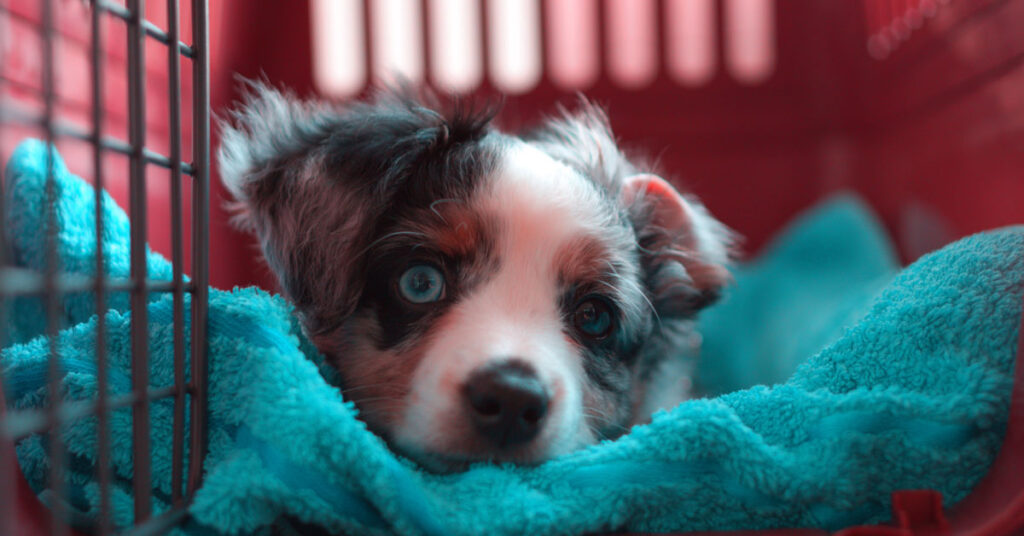
Few things bring more joy than a new puppy, those wobbly paws, sleepy snuggles, and adorable poses make every moment special. But along with the fun comes responsibility: puppies need structure and training to grow into well-behaved adult dogs. One of the most valuable skills you can teach your puppy is how to be comfortable in a crate. Crate training keeps them safe, prevents destructive behavior, and helps with housebreaking.
Crate training, however, can sometimes test a pet owner’s patience, especially when faced with whining or crying. The key is to introduce the crate gradually and make it a positive, secure space. Here’s how to help your puppy learn to love their crate.
1. Introduce the crate.
Place the crate in a room where your family spends plenty of time, so your puppy feels included. Make it cozy by adding a soft blanket or towel inside.
2. Feed meals in the crate.
Serve your puppy’s meals inside the crate to build a positive association. First, leave the door open. Once they’re comfortable, start closing it for a few minutes, gradually increasing the time. If your puppy whines, wait until they’re quiet before letting them out, otherwise, they’ll learn that whining earns freedom.
3. Use treats and toys.
Reward your puppy each time they enter the crate. A safe chew toy or a Kong with a small amount of peanut butter can keep them occupied and make crate time enjoyable. Just use enough peanut butter to spark interest, not fill the toy completely.
4. Exercise first.
Make sure your puppy gets plenty of playtime and exercise before crate sessions. A tired puppy is more likely to rest quietly.
5. Remove collars and harnesses.
For safety, take off your puppy’s collar or harness before crating. If the gear catches on the crate wires, it could cause injury.
6. Be patient and consistent.
Crate training doesn’t happen overnight. Depending on your puppy’s age, temperament, and background, it can take several weeks or even months. Stay calm, consistent, and positive, progress will come.
Some whining is perfectly normal as your puppy adjusts. However, if your dog shows signs of distress or continues to whine excessively, consult your veterinarian or a professional trainer to ensure nothing else is wrong.
{{head}}